 Loom Robotics
Decentralized robotic construction.
WEAVE, the Workload Execution and Autonomous Verification Engine: a swarm that builds from a replicated assembly graph, with no one in charge.
Loom Robotics
Loading
Loom Robotics
WEAVE, the Workload Execution and Autonomous Verification Engine: a swarm that builds from a replicated assembly graph, with no one in charge.
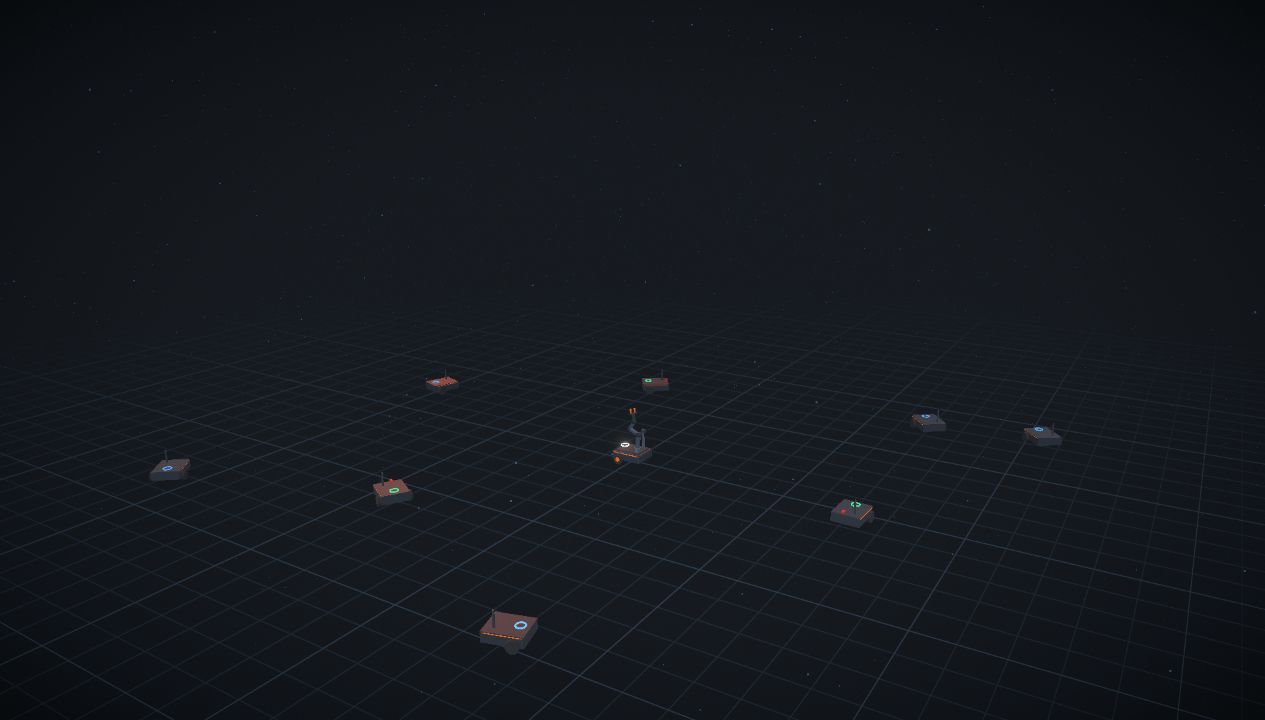
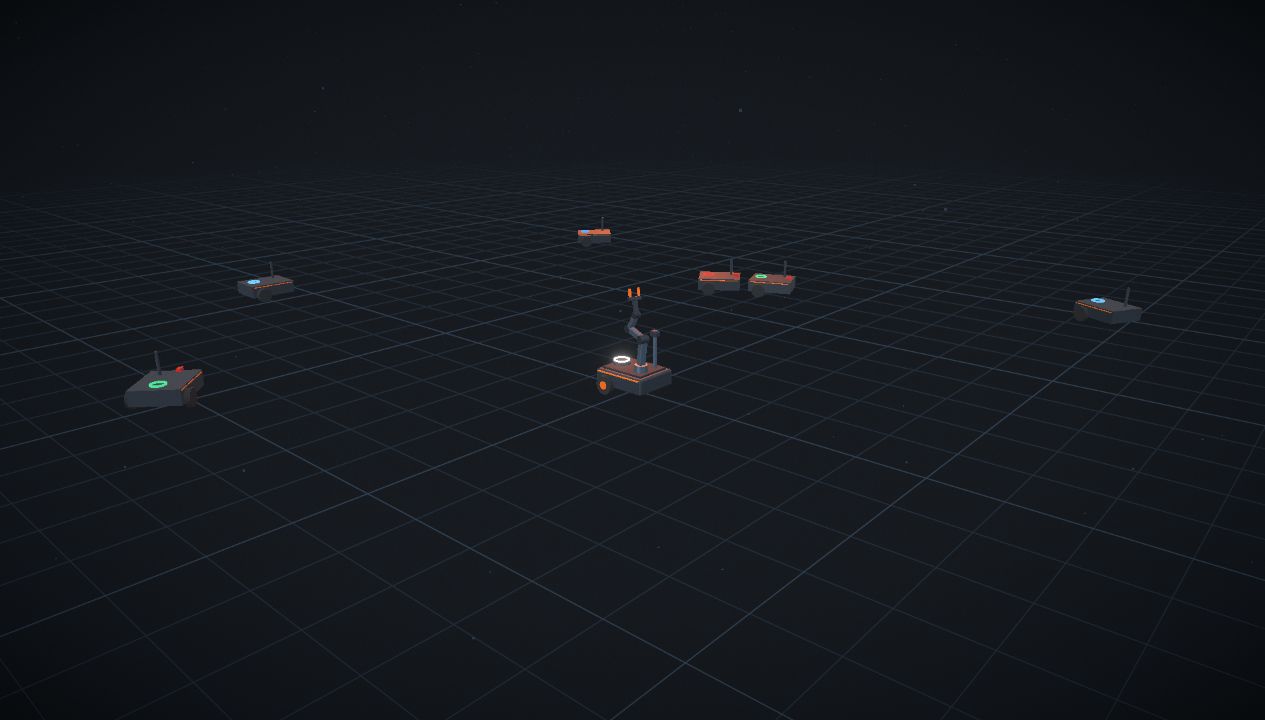 The swarm
Every worker carries its own copy of the build plan and pulls its own work. Jobs are claimed, never assigned. About three events per job, no polling. Lose a robot and its lease simply expires.
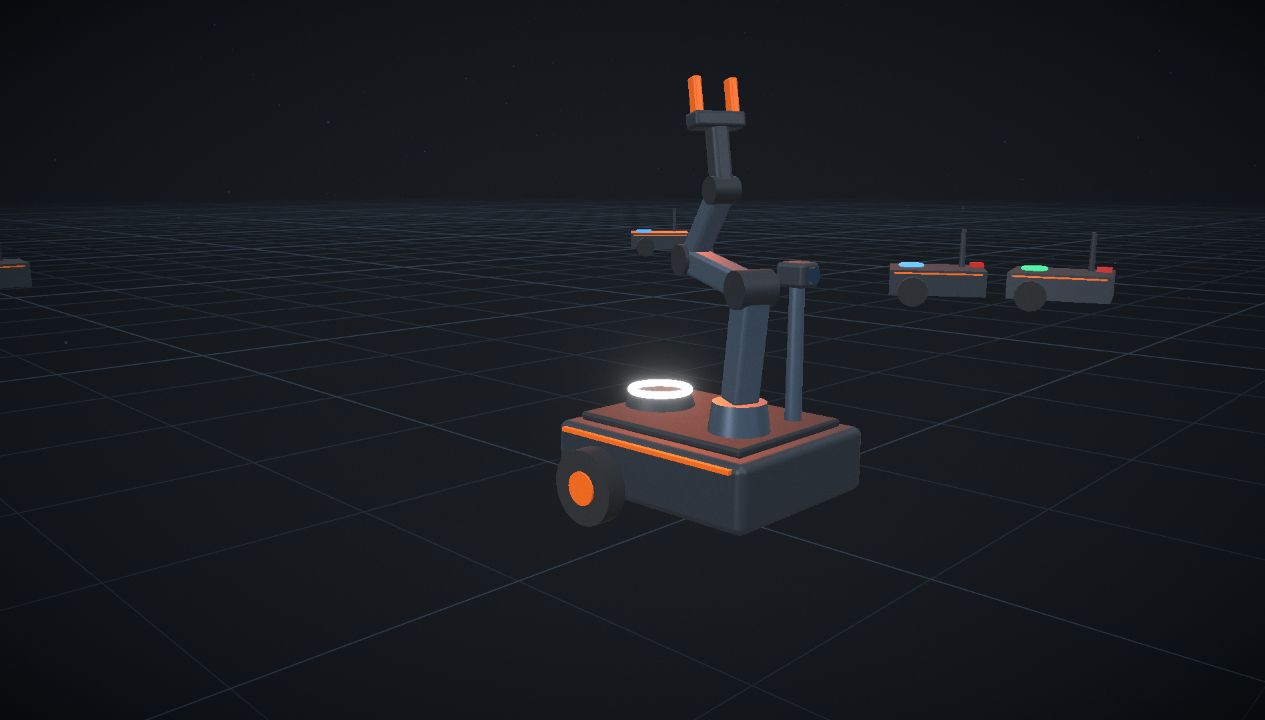 Worker V1
A differential-drive base, a 4-DOF arm, one camera. A Raspberry Pi 5 runs the ROS 2 peer stack while a Pico 2 W handles motors in real time. The base does coarse positioning; the arm does fine placement.
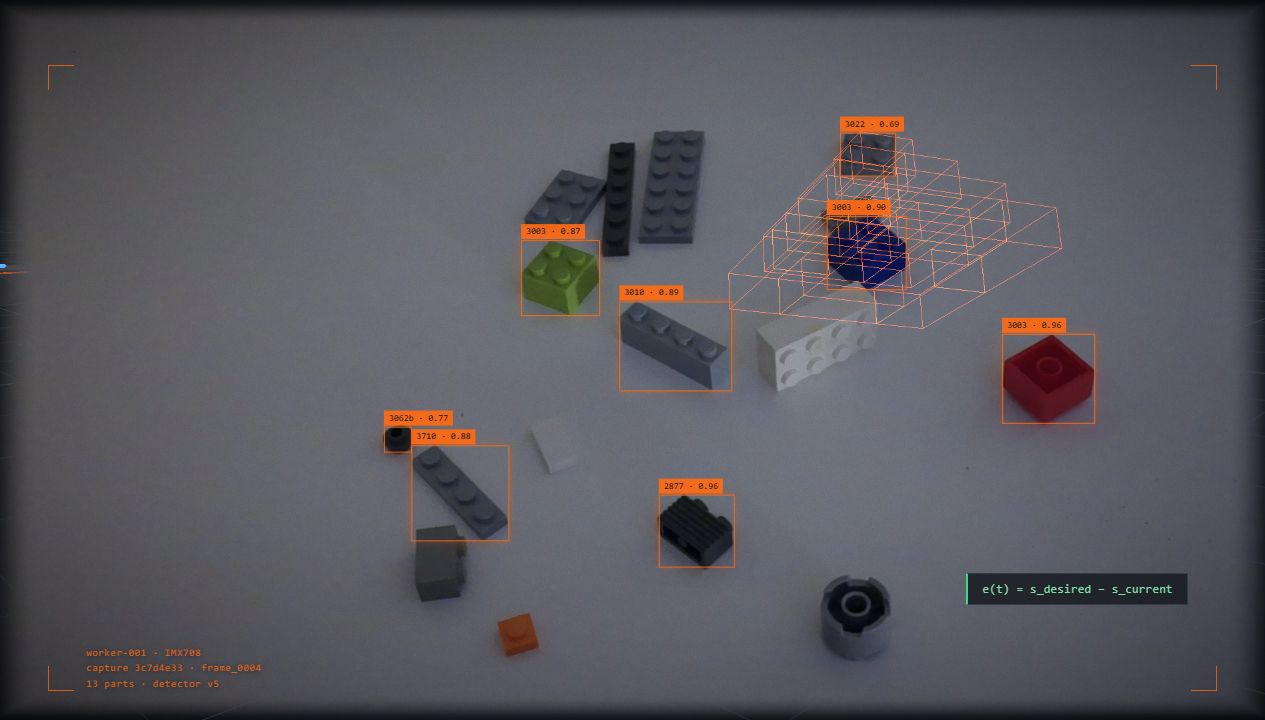 Through the worker's eye
A real frame from worker-001's camera, with the detector's own output on it: part number and confidence, after the inventory and geometry gates. The learned detector scores 70% against a 29% classical baseline on the worker's own imagery. Against it stands the desired state, the plan, one dependency wave at a time.
 Build → Verify → Continue
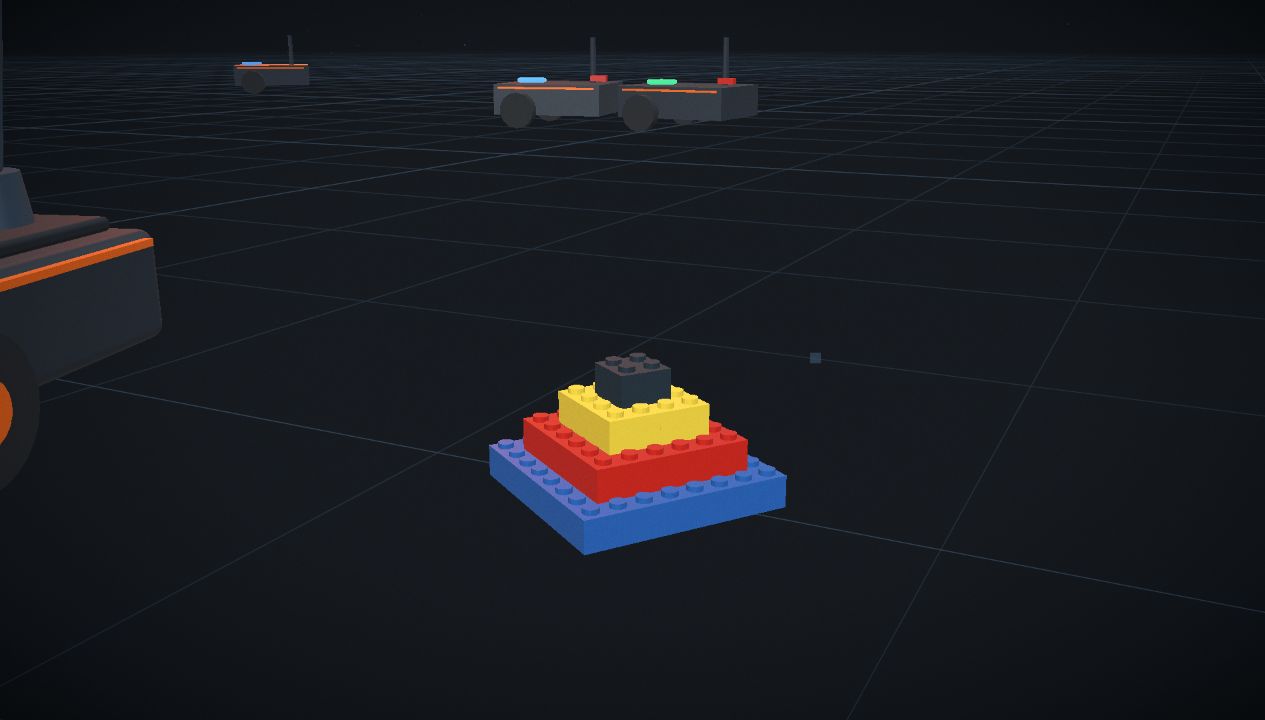
A placement is never complete until it is verified against the plan. Pass, and dependents unlock. Fail, and the job is released for another worker to retry. Thirteen bricks across four dependency waves, assembled in the real build order from the real assembly graph.
 Assembly Graph
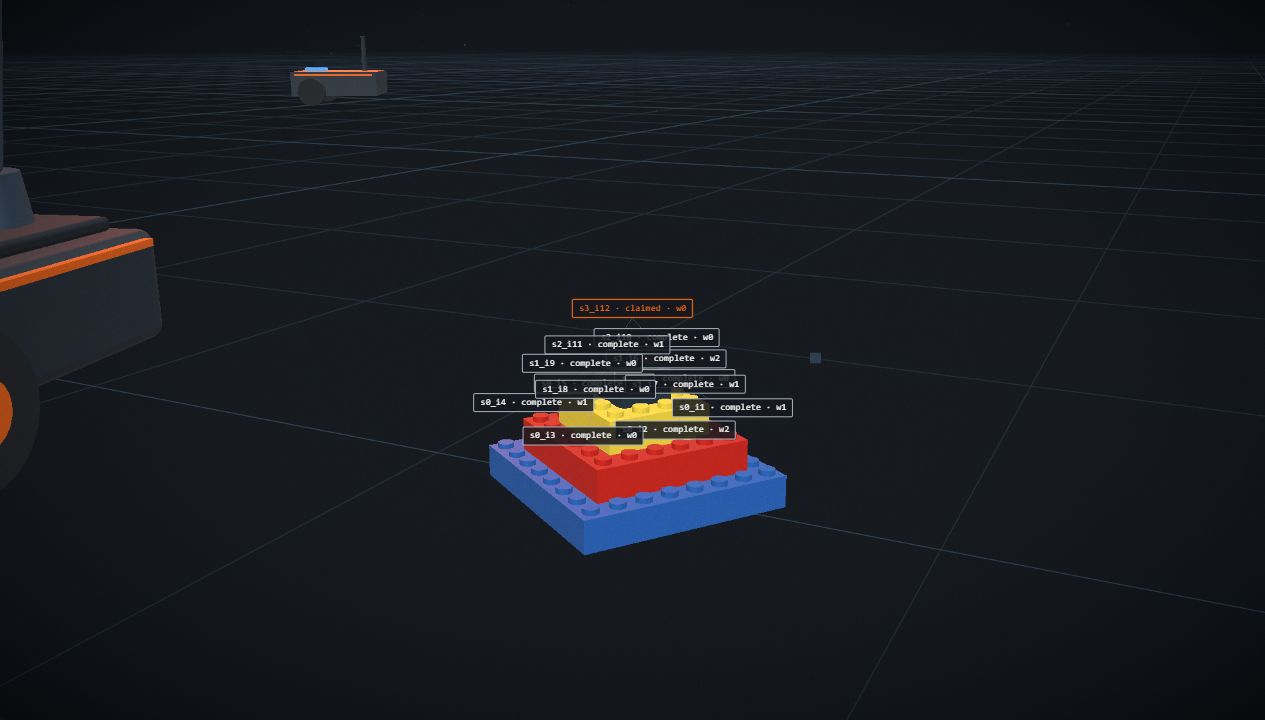
Every robot carries this graph: replicated, versioned, event-sourced, convergent. Each brick is a job node. Jobs unlock as their supports complete, a claim is three events on the wire, and a dead worker's lease simply expires.
 This is WEAVE
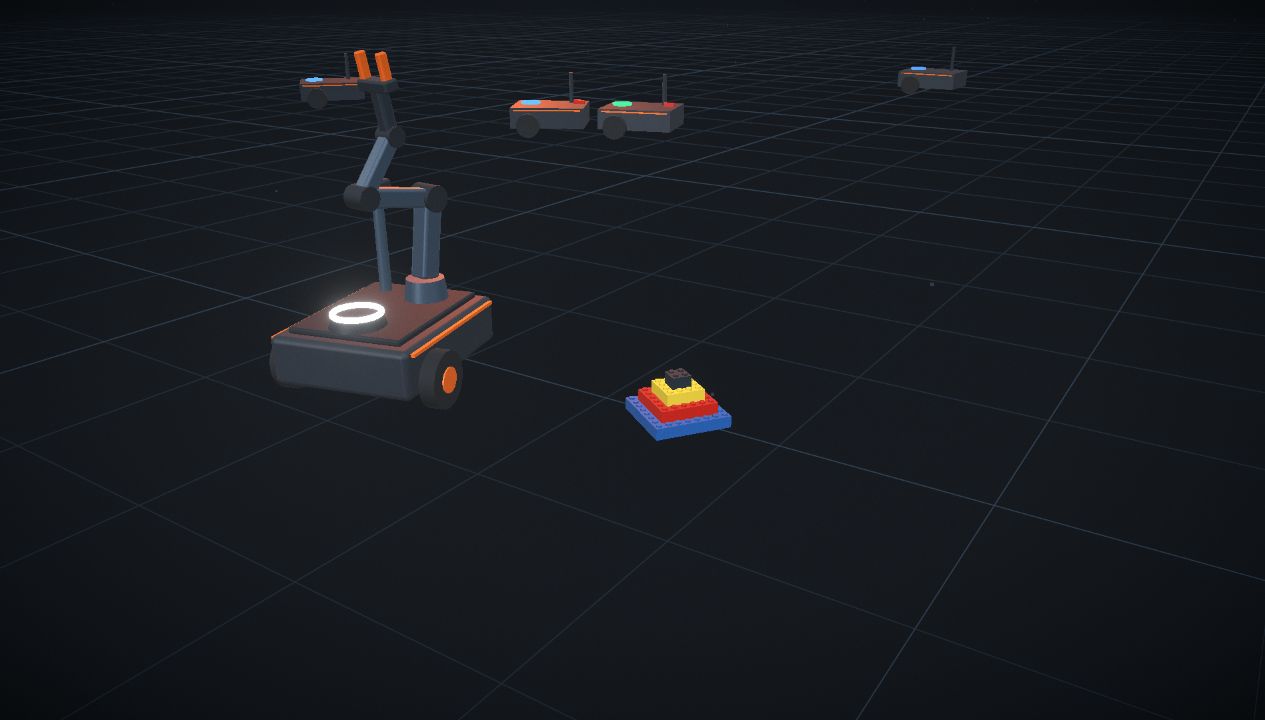
Yet every robot knows exactly where the project stands. Everything above is our simulation, rendered live. Hardware bring-up is underway.